
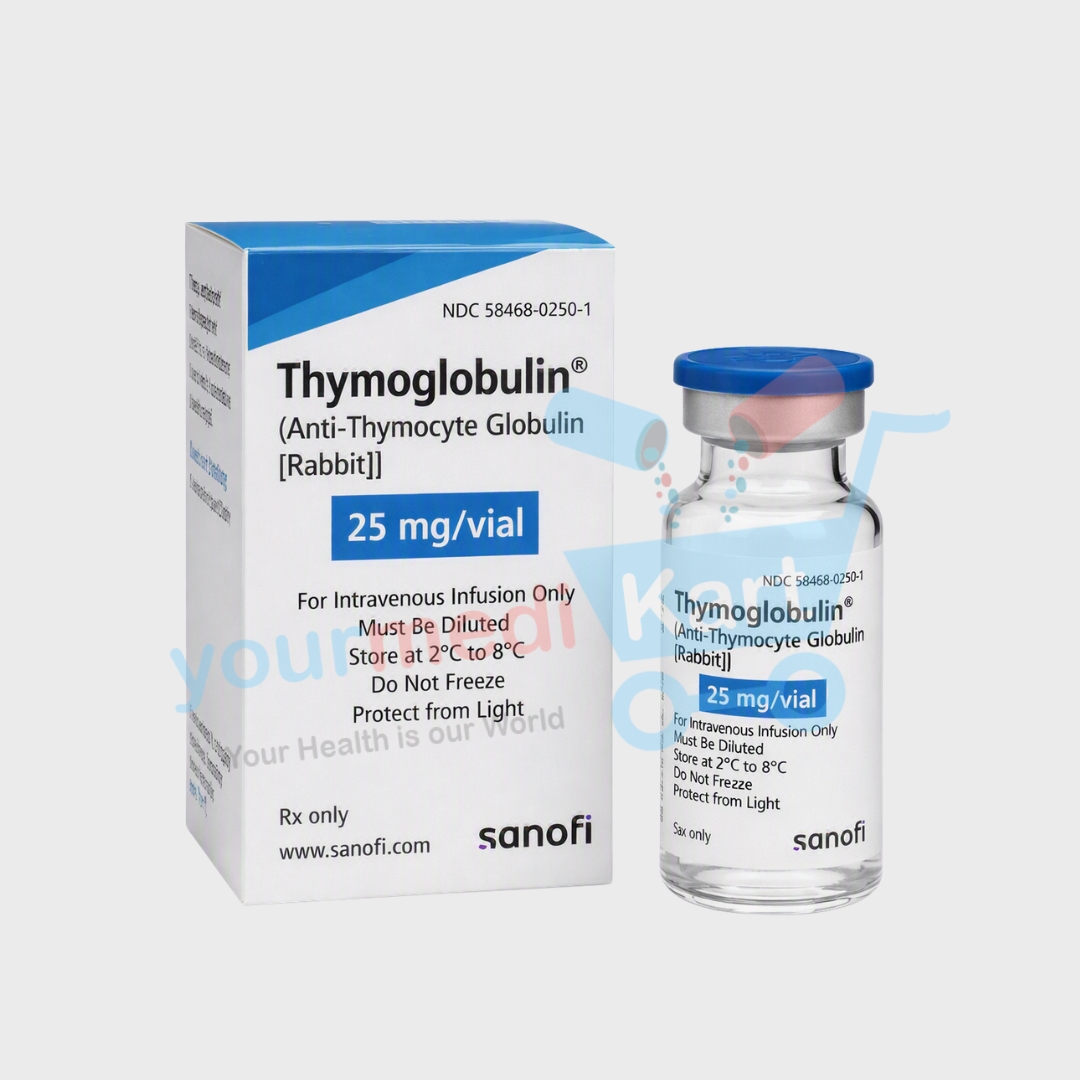
Generic Name: Anti-human thymocyte immunoglobulin
Brand Name: Thymoglobulin®
Strength: 25 mg
Dosage Form: Powder for solution for infusion
Route of Administration: Intravenous infusion
Therapeutic Class: Immunosuppressant / Immunoglobulin
Active Ingredient: Rabbit anti-human thymocyte immunoglobulin
Product Overview
- Thymoglobulin 25 mg Injection uses is an immunosuppressive medicine containing rabbit anti-human thymocyte immunoglobulin. It is used primarily in specialist hospital settings to help suppress the body’s immune response in situations where control immunosuppression is medically require.
- Thymoglobulin contains purified immunoglobulins produced by immunizing rabbits with human thymocytes. These antibodies act against several types of human T lymphocytes, helping reduce T-cell-mediated immune activity.
- The medicine is supplied as a 25 mg sterile lyophilized powder that must reconstitute and further diluted before administration as an intravenous infusion by qualified healthcare professionals.
Thymoglobulin 25 mg Injection is a prescription immunosuppressive medicine containing rabbit anti-human thymocyte immunoglobulin (rATG). It is primarily used in specialist medical settings, particularly as part of treatment protocols associated with organ transplantation.
Thymoglobulin works by targeting and reducing the activity of T lymphocytes, which are important cells involved in immune responses. By temporarily suppressing T-cell activity, it can help prevent or manage certain immune-mediated complications following transplantation.
What Is Thymoglobulin 25 mg Injection?
- Thymoglobulin 25 mg is an immunosuppressive preparation containing rabbit anti-human thymocyte immunoglobulin. It is supplied as a sterile lyophilized powder that requires reconstitution and dilution before being administered through intravenous infusion.
- The medicine is generally used in hospitals and transplant centers under the supervision of healthcare professionals. The 25 mg strength refers to the amount contained in the vial, while the actual dose administered to a patient is determined according to the treatment protocol and individual clinical factors.
Thymoglobulin 25 mg Uses
The Thymoglobulin 25 mg Injection uses are mainly associated with controlled suppression of the immune system.
Depending on the approved indication and local prescribing information, Thymoglobulin may use for:
- Prevention of acute organ transplant rejection
- Treatment of acute rejection following transplantation
- Induction of immunosuppression in selected transplant patients
- Suppression of T-cell-mediated immune responses
The exact indications can vary depending on the country and transplant type. A transplant specialist determines whether Thymoglobulin is appropriate for an individual patient.
How Does Thymoglobulin Work?
- The active ingredient in Thymoglobulin is a preparation of antibodies that targets multiple proteins found on human T lymphocytes.
- T cells play a major role in the body’s cellular immune response. After an organ transplant, the immune system may recognize the transplanted organ as foreign and attempt to attack it. This immune response can contribute to transplant rejection.
- Thymoglobulin binds to T-cell-associated antigens and contributes to the depletion of circulating T lymphocytes. This produces temporary immune suppression and helps reduce T-cell-mediated immune activity.
- Because of its potent immunosuppressive effects, Thymoglobulin must administer and monitored by appropriately trained healthcare professionals.
Thymoglobulin Dosage
- The Thymoglobulin dosage depends on the reason for treatment, the patient’s body weight, transplant type, clinical condition, blood-cell counts, and the specific treatment protocol.
- Dosing is generally calculated according to body weight rather than simply administering the entire 25 mg vial. Multiple vials may therefore require to prepare an individual patient’s prescribe dose.
- Healthcare professionals may monitor blood counts and other clinical parameters during treatment and adjust therapy when necessary.
- Patients should not attempt to calculate or change their Thymoglobulin dose themselves.
Administration of Thymoglobulin 25 mg
- Thymoglobulin 25 mg is administered by intravenous infusion after appropriate reconstitution and dilution.
- Treatment should take place in a suitable clinical environment where the patient can monitor for infusion-related reactions and other potential complications.
- Healthcare professionals may provide appropriate premedication before infusion according to the prescribing information and institutional treatment protocol.
Thymoglobulin Benefits
The potential Thymoglobulin benefits are primarily related to its ability to produce temporary and controlled immunosuppression.
In appropriate transplant protocols, Thymoglobulin may help:
- Reduce T-cell-mediated immune activity
- Support induction immunosuppression
- Reduce the risk of acute transplant rejection in selected patients
- Assist in the management of certain acute rejection episodes
The expected benefit depends on the patient’s medical condition, transplant type, treatment regimen, and response to therapy.
Thymoglobulin Side Effects
Like other immunosuppressive medicines, Thymoglobulin side effects can occur and may vary between patients.
Potential adverse effects may include:
- Fever
- Chills
- Nausea
- Headache
- Dizziness
- Low blood pressure
- Skin reactions
- Fatigue
- Decreased white blood cell count
- Decreased platelet count
- Increased susceptibility to infections
Infusion-associated reactions may occur during or after administration. Serious hypersensitivity reactions are also possible and require immediate medical attention.
Because Thymoglobulin suppresses immune function, patients may have an increased risk of infections. Close medical monitoring is therefore important throughout treatment.
Important Thymoglobulin Precautions
Before receiving Thymoglobulin, patients should inform their healthcare provider about their medical history, allergies, current medications, and previous reactions to immunoglobulin or rabbit-derived products.
Important precautions include:
Risk of Infection
Thymoglobulin suppresses immune function and can increase susceptibility to infections. Patients may require monitoring for signs and symptoms of bacterial, viral, fungal, or other infections.
Blood-Cell Changes
Treatment may result in reduced levels of white blood cells or platelets. Blood counts may therefore monitor during therapy.
Infusion Reactions
Fever, chills, rash, changes in blood pressure, and other infusion-associated reactions may occur. Patients are monitored during administration so that reactions can recognize and managed promptly.
Allergic Reactions
Patients with known hypersensitivity to rabbit proteins or components of the formulation should discuss this with their healthcare professional before treatment.
Thymoglobulin for Transplant Patients
- Thymoglobulin for transplant is use as part of carefully design immunosuppressive protocols. Following an organ transplant, the immune system can identify the transplanted organ as foreign.
- T lymphocytes are among the immune cells involve in this response. By reducing T-cell activity, Thymoglobulin can contribute to the immunosuppressive strategy used to protect the transplanted organ.
- It may be used alongside other immunosuppressive medicines, depending on the patient’s transplant plan.
Thymoglobulin and Other Immunosuppressive Medicines
- Thymoglobulin may administer as part of a broader immunosuppressive regimen. Other medicines may use before, during, or after Thymoglobulin treatment depending on the transplant protocol.
- Because combining immunosuppressive medicines can increase the risk of infections and other complications, treatment requires careful medical supervision.
- Patients should provide their healthcare team with a complete list of prescription medicines, over-the-counter products, and supplements they are taking.
Storage and Handling
- Thymoglobulin 25 mg is supply as a sterile lyophilized powder. The unopened product should store according to the manufacturer’s instructions.
- Reconstitution, dilution, storage of the prepared solution, and intravenous administration should perform according to the approved product information and hospital procedures.
- The medicine is intend for professional use and should not self-administer.
Key Product Information
- Product: Thymoglobulin 25 mg Injection
- Active ingredient: Rabbit anti-human thymocyte immunoglobulin
- Strength: 25 mg
- Dosage form: Lyophilized powder for solution for infusion
- Route: Intravenous infusion
- Drug class: Immunosuppressant
- Primary target: T lymphocytes
- Main clinical setting: Specialist transplant and immunosuppressive therapy
Conclusion
Thymoglobulin 25 mg Injection is a specialized immunosuppressive medicine that targets T lymphocytes and plays an important role in selected transplantation protocols. Its ability to temporarily reduce T-cell activity makes it useful for induction immunosuppression and the management or prevention of certain transplant rejection episodes.
Understanding Thymoglobulin uses, dosage, benefits, side effects, and precautions is important for patients and caregivers. However, because the medicine can produce significant immune suppression and infusion-related reactions, it should only administer under appropriate medical supervision.
Important Disclaimer
This content is intend for educational and informational purposes only. It does not replace professional medical advice, diagnosis, or treatment. Thymoglobulin 25 mg should use only under the supervision of a qualified healthcare professional. Dosage, indications, contraindications, warnings, and treatment protocols may vary by country and patient. Always consult the current local prescribing information and a healthcare professional before treatment.