
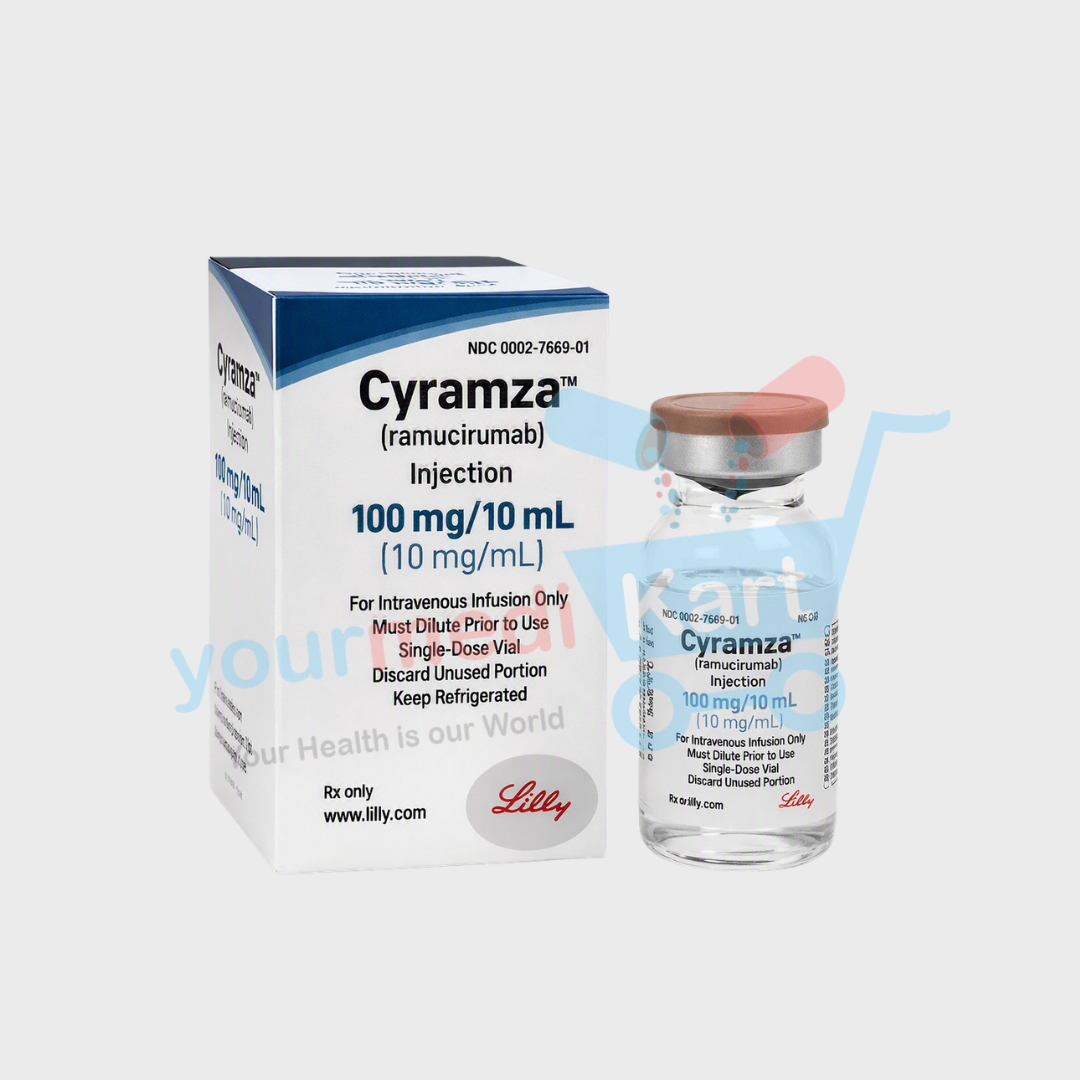
Brand Name: Cyramza®
Generic Name: Ramucirumab
Strength: 100 mg/10 mL
Dosage Form: Injection solution
Route of Administration: Intravenous infusion
Therapeutic Class: Antineoplastic Agent / VEGFR-2 Antagonist
Active Ingredient: Ramucirumab
Cyramza 100 mg Injection is a prescription oncology medicine containing ramucirumab, a targeted monoclonal antibody used in the treatment of certain advanced or metastatic cancers. It works by targeting vascular endothelial growth factor receptor 2 (VEGFR-2), a pathway involved in the development of new blood vessels that can support tumor growth.
Because Cyramza is used for specific types of cancer and may administer alone or alongside other anticancer medicines, treatment decisions are made according to the patient’s diagnosis, previous treatment, overall health, and the treating oncologist’s recommendations.
What Is Cyramza 100 mg?
- Cyramza 100 mg Injection contains ramucirumab 100 mg in 10 mL and is administered through intravenous infusion by a qualified healthcare professional.
- Ramucirumab belongs to a class of targeted cancer medicines known as VEGFR-2 antagonists. Rather than directly destroying cancer cells in the same way as traditional chemotherapy, it interferes with a signaling pathway that helps tumors develop and maintain their blood supply.
- The 100 mg vial represents the available product strength; the actual treatment dose is generally calculated according to the patient’s body weight and the particular cancer treatment regimen.
Cyramza 100 mg Injection Uses
The Cyramza 100 mg Injection uses depend on the type and stage of cancer and the treatment regimen prescribed by an oncologist.
Depending on the applicable approval, Cyramza may use for certain adults with:
- Advanced or metastatic gastric cancer or gastroesophageal junction adenocarcinoma
- Certain forms of metastatic non-small cell lung cancer
- Metastatic colorectal cancer
- Hepatocellular carcinoma in appropriately selected patients
Cyramza may prescribe as a single agent or in combination with medicines such as paclitaxel, docetaxel, FOLFIRI, erlotinib, or other therapies depending on the indication.
The approved uses may differ between countries, so the relevant local prescribing information should always followe.
How Does Cyramza Work?
- The active ingredient in Cyramza, ramucirumab, specifically targets VEGFR-2.
- Cancerous tumors can stimulate the formation of new blood vessels through a process called angiogenesis. These blood vessels can provide tumors with oxygen and nutrients that support their growth.
- Ramucirumab binds to VEGFR-2 and blocks activation of this receptor by vascular endothelial growth factor (VEGF). By interfering with this signaling pathway, Cyramza can inhibit VEGF-mediated angiogenesis and reduce the tumor’s ability to develop new blood vessels.
- This targeted mechanism is an important part of how Cyramza cancer treatment works.
Cyramza Treatment for Different Cancers
Cyramza for Gastric Cancer
This is used in certain adults with advanced or metastatic gastric cancer or gastroesophageal junction adenocarcinoma after progression following specified previous chemotherapy.
It may administer alone or in combination with paclitaxel, depending on the patient’s treatment plan.
Cyramza for Lung Cancer
Cyramza may use in certain patients with metastatic non-small cell lung cancer. Depending on the indication, it may combine with docetaxel or used with erlotinib for selected patients with specific EGFR-mutated tumors.
Cyramza for Colorectal Cancer
For certain adults with metastatic colorectal cancer whose disease has progressed following specified previous treatment, Cyramza may administer in combination with FOLFIRI chemotherapy.
Cyramza for Hepatocellular Carcinoma
Ramucirumab Cyramza may use as a single-agent treatment for appropriately selected adults with hepatocellular carcinoma who meet specific clinical criteria, including an elevated alpha-fetoprotein (AFP) level and previous treatment with sorafenib.
Cyramza Dosage
- The Cyramza dosage is not the same for every patient. It depends on the cancer being treated and whether Cyramza is being administered alone or with another anticancer medicine.
- For several approved indications, dosing is based on body weight and may administer at intervals such as every two weeks or on specific treatment-cycle days.
- For example, approved regimens include doses of 8 mg/kg or 10 mg/kg for certain indications. The exact dose and infusion schedule should determine by the treating oncologist.
- The Cyramza 100 mg vial should not interpret as the complete dose for an individual patient.
How Is Cyramza Administered?
Cyramza is given by intravenous infusion. It is not intended for self-administration.
Before treatment, healthcare professionals may evaluate factors such as blood pressure, urine protein levels, blood counts, and the patient’s overall clinical condition.
Patients may also receive premedication before Cyramza infusion to reduce the risk of infusion-related reactions, according to the applicable prescribing information.
Cyramza Benefits
The potential Cyramza benefits are related to its targeted action against the VEGFR-2 pathway.
Depending on the cancer and treatment combination, Cyramza may:
- Help slow the progression of certain advanced cancers
- Provide a targeted approach to interfering with tumor-associated angiogenesis
- Use alongside other anticancer treatments
- Offer a treatment option for selected patients whose cancer has progressed after previous therapies
The benefits of Cyramza vary considerably from patient to patient and should discuss with an oncology specialist.
Cyramza Side Effects
Like other anticancer medicines, Cyramza can cause side effects. The type and severity can vary depending on the patient’s condition and whether it is given alone or with other medicines.
Potential Cyramza side effects include:
- High blood pressure
- Diarrhea
- Fatigue
- Reduced appetite
- Nosebleeds
- Stomatitis
- Proteinuria
- Low blood-cell counts
- Peripheral edema
- Nausea
- Abdominal discomfort
Some reactions can serious. Cyramza has important warnings relating to hemorrhage, gastrointestinal perforation, impaired wound healing, hypertension, and proteinuria.
Patients should promptly report unusual bleeding, severe abdominal pain, significant changes in blood pressure, or other concerning symptoms to their healthcare team.
Cyramza Precautions
Cyramza requires careful monitoring during treatment. Healthcare professionals may monitor blood pressure, urine protein, blood counts, wound healing, and other clinical parameters.
Patients should inform their doctor about:
- Previous severe bleeding problems
- Planned surgery
- Current medicines and cancer treatments
- Existing high blood pressure
- Kidney or liver problems
- Pregnancy or plans to become pregnant
- Any unusual bleeding or other new symptoms
Because ramucirumab may cause fetal harm, appropriate pregnancy precautions should discuss with a healthcare professional.
Cyramza and Other Cancer Medicines
- Cyramza is sometimes used in combination with other anticancer medicines. The combination depends on the specific cancer and treatment line.
- For example, approved treatment regimens may combine Cyramza with paclitaxel, docetaxel, FOLFIRI, or erlotinib.
- Combining medicines can improve treatment effectiveness for selected patients, but it can also affect the side-effect profile. Therefore, combination treatment should only use according to a specialist’s treatment plan.
Why Medical Supervision Is Important
Cyramza is a specialized prescription medicine that requires professional preparation, intravenous administration, and patient monitoring.
The appropriate treatment plan depends on several factors, including:
- Cancer type and stage
- Previous treatments
- Body weight
- Overall health
- Laboratory results
- Blood pressure
- Kidney and liver function
- Other medicines being taken
Patients should not change the dose, treatment schedule, or duration of Cyramza therapy without consulting their oncologist.
Conclusion
Cyramza 100 mg Injection (ramucirumab) is a targeted oncology medicine that works by blocking VEGFR-2 and interfering with tumor-associated blood-vessel formation. Its approved applications include specific forms of gastric, lung, colorectal, and liver cancer, depending on the patient’s clinical circumstances and local regulatory approvals.
Understanding Cyramza 100 mg uses, dosage, benefits, side effects, and precautions can help patients and caregivers have more informed discussions with their healthcare professionals. Because Cyramza treatment is individualize, it should always use under the supervision of a qualified oncology specialist.
Important Disclaimer
This content is intend for educational and informational purposes only. It does not replace professional medical advice, diagnosis, or treatment. Cyramza 100 mg is a prescription medicine and should administer only under appropriate medical supervision. Indications, dosage recommendations, warnings, and treatment protocols may vary by country. Always refer to the current local prescribing information and consult a qualified healthcare professional.