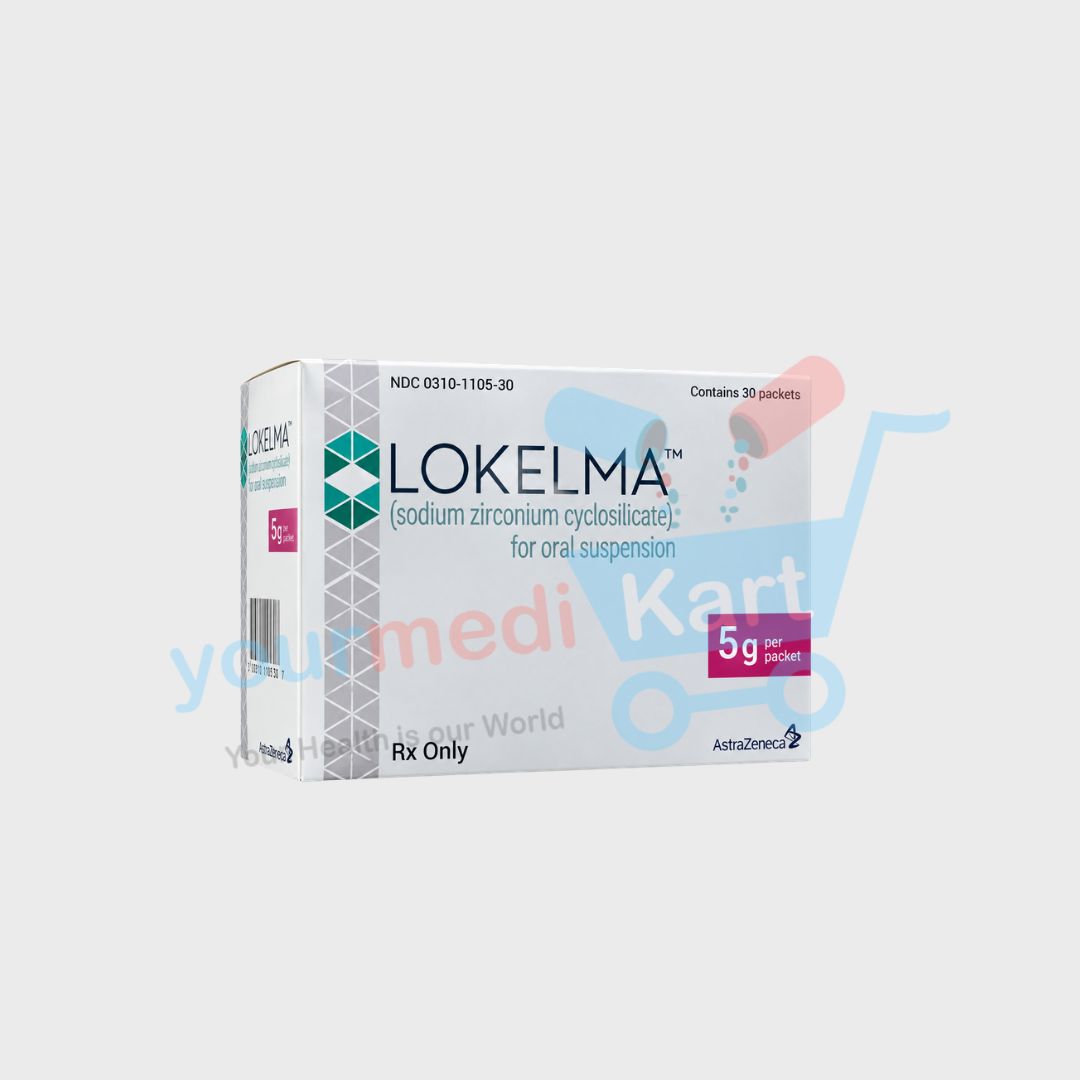
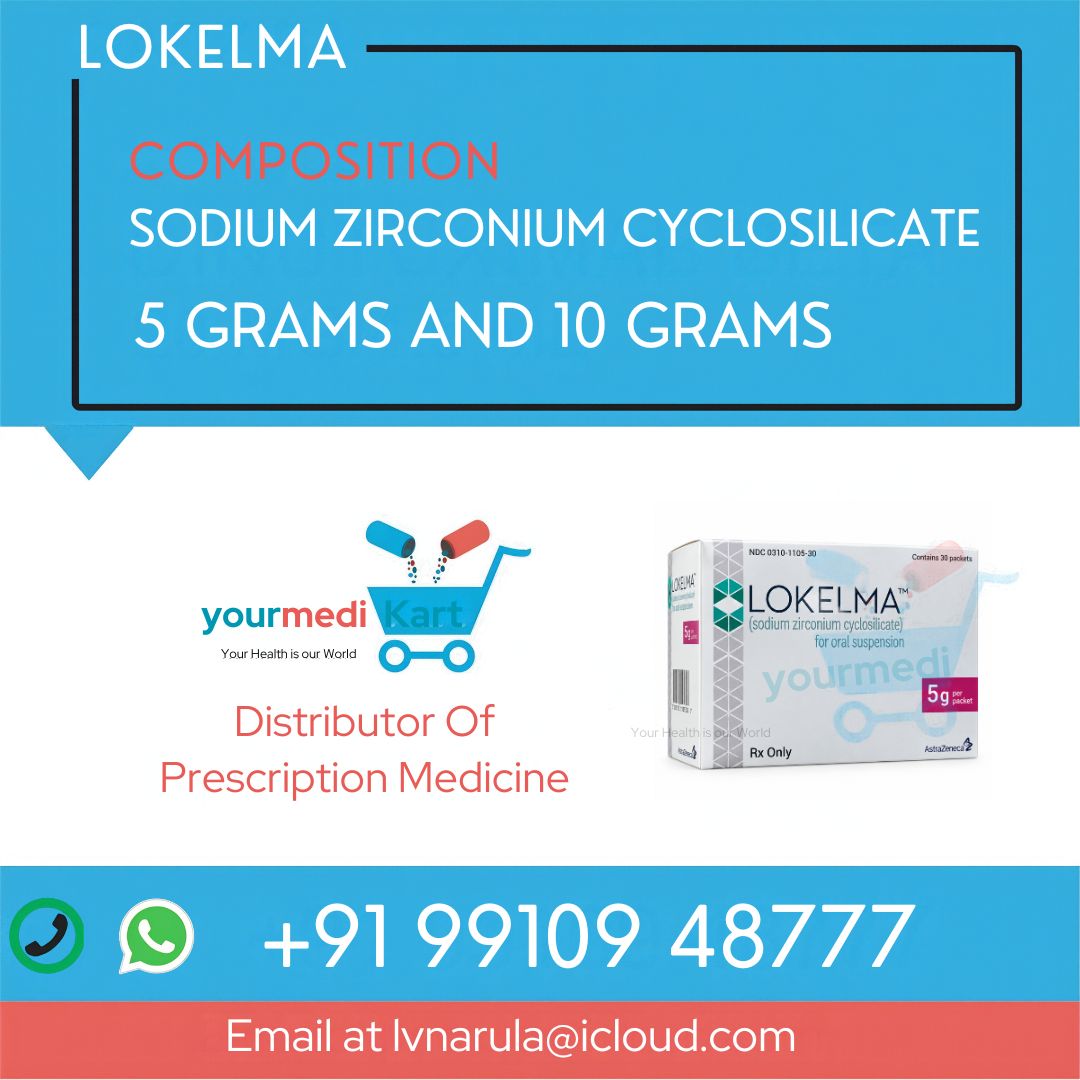
Lokelma 5g Sachet Powder for Oral Suspension is a medicine used in adults to lower high potassium levels in the blood (hyperkalemia). It works by trapping extra potassium in the intestines and removing it from the body through bowel movements. This medicine is not used for emergency treatment of high potassium levels. Lokelma 5g Sachet Powder Uses, Side Effects, Dosage & Price.
Pronunciation: lo-KELL-ma
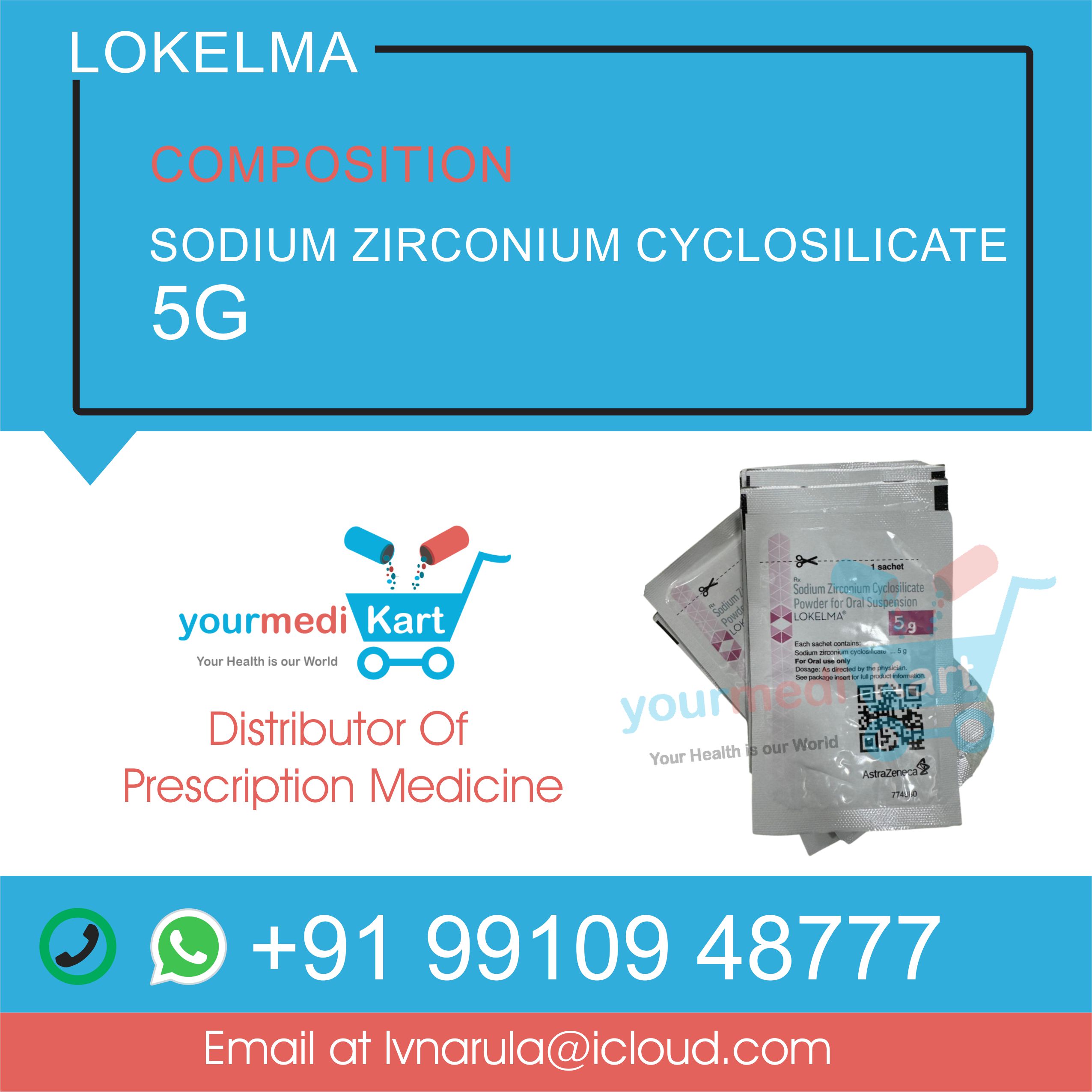
Generic name: Sodium Zirconium Cyclosilicate
Dosage form: 5 grams (g) and 10 g
What is Lokelma used for?
Lokelma is a prescription medicine used to treat high potassium levels in the blood (hyperkalemia). It contains the active ingredient sodium zirconium cyclosilicate and works by helping remove extra potassium from the body.
Lokelma is approved for use in adults with high potassium levels.
However, Lokelma should not be used in emergencies because it does not work immediately. Very high potassium levels can be dangerous and may cause symptoms such as a fast or irregular heartbeat, shortness of breath, vomiting, chest pain, or paralysis. If you have any of these symptoms, call emergency services or go to the nearest emergency room right away.
How Lokelma Powder works?
How should I take Lokelma?
Always take this medicine exactly as your doctor has told you. Check with your doctor or pharmacist if you are not sure.
How to Take Lokelma
- Open the sachet(s) and pour the powder into a glass containing about 45 ml of still water (not sparkling water).
- Stir well and drink the mixture immediately.
- The powder does not fully dissolve, so the liquid may look cloudy. The powder may also settle at the bottom of the glass. If this happens, stir it again and drink all of it.
- If needed, add a little more water to the glass, swirl it around, and drink it to make sure you take all of the medicine.
If You Take Too Much Lokelma
If you take more Lokelma than prescribed, contact a doctor right away. Do not take any more medicine until you have spoken with a doctor.
If You Forget a Dose
If you miss a dose, skip it and take your next dose at the usual time.
Do not take two doses at the same time to make up for the missed dose.
If You Stop Taking Lokelma
Do not reduce your dose or stop taking Lokelma without talking to your doctor first. Stopping the medicine may cause your potassium levels to become high again.
Need More Help?
If you have any questions about using this medicine, speak with your doctor, pharmacist, or nurse.
What are the most common side effects of Lokelma?
Like all medicines, this medicine can cause side effects, but not everyone will get them.
Tell your doctor or nurse if you notice any of the following side effects:
Very common side effects (affect more than 1 in 10 people):
- Worsening of an existing heart failure condition.
Common side effects (affect up to 1 in 10 people):
- Feeling tired, weak, or having muscle cramps. This could mean that the level of potassium in your blood is too low. Contact your doctor straight away if these symptoms become severe.
- Swelling in any part of the body, especially the feet and ankles, caused by a build-up of fluid.
- Constipation.
What you need to know before you take Lokelma
- If you are allergic to the active substance.
Warnings and precautions
Your doctor or nurse will check the level of potassium in your blood when you start taking this medicine. This helps make sure you are taking the right dose. Your dose may be increased or decreased depending on your potassium level. If your potassium level becomes too low, the treatment may be stopped.
Tell your doctor or nurse if you are taking any medicines that can affect your potassium levels, as your Lokelma dose may need to be changed. These medicines include:
- Diuretics (water tablets that make you urinate more)
- ACE inhibitors such as enalapril
- Angiotensin receptor blockers (ARBs) such as valsartan
- Renin inhibitors such as aliskiren
While taking Lokelma, tell your doctor or nurse if:
- You have a heart rhythm problem called QT prolongation, because Lokelma can lower potassium levels and affect your heart’s electrical activity.
- You need to have an X-ray, as Lokelma may affect the results.
- You develop sudden or severe stomach pain, as this could be a sign of a serious problem in your digestive system.
- You already have heart failure. In some people, Lokelma may make heart failure worse.
Signs that heart failure may be getting worse include:
- Increasing shortness of breath
- Swelling in your legs or ankles
- Sudden weight gain
If you notice any of these symptoms, contact your doctor immediately.
What are the serious side effects of Lokelma?
Serious Side Effects of Lokelma
Although they are not common, Lokelma can sometimes cause serious side effects. If any of these happen, get medical help immediately.
Severe Allergic Reaction
Lokelma may cause a serious allergic reaction. Stop taking the medicine and seek emergency medical care right away if you have any of these symptoms:
- Trouble breathing or wheezing
- Fast or pounding heartbeat
- Fever or feeling generally unwell
- Swollen lymph nodes
- Swelling of the face, lips, mouth, tongue, or throat
- Difficulty swallowing or a tight feeling in the throat
- Itching, rash, or raised red bumps on the skin (hives)
- Nausea or vomiting
- Dizziness, feeling faint, or passing out
- Stomach cramps
- Joint pain
Fluid Retention (Swelling)
Each 5-gram dose of Lokelma contains 400 mg of sodium (salt). In some people, especially those who are sensitive to salt or follow a low-sodium diet, this can cause the body to hold extra fluid. This may be dangerous for people with heart failure, kidney disease, or similar conditions.
Contact your healthcare provider right away if you notice:
- Chest pain
- An irregular heartbeat
- Shortness of breath
- Skin that looks stretched or shiny
- Swelling in areas such as the ankles, feet, legs, or stomach (belly)
These symptoms may mean your body is retaining too much fluid and needs medical attention.
Low Potassium Level (Hypokalemia)
Lokelma may lower the amount of potassium in your blood. In some cases, this can be serious and may even be life-threatening. Your doctor will check your potassium levels, especially if you are taking other medicines.
Contact your doctor if you notice any of these signs of low potassium:
- Feeling weak
- Feeling unusually tired
- Muscle cramps or muscle twitching
- Constipation
What should I tell my doctor before taking Lokelma?
Tell your doctor about all your health problems and any medicines or supplements you take, including prescription medicines, over-the-counter (OTC) medicines, vitamins, minerals, herbal products, and other supplements. This helps your doctor decide if Lokelma is safe and suitable for you.
Make sure to tell your doctor if you have:
- Diarrhea or any illness that makes you eat or drink less than usual, especially if you are on dialysis.
- A condition that slows down movement in your intestines.
- An upcoming X-ray.
- A blockage in your bowels (intestines).
- Heart problems, such as heart failure or an irregular heartbeat.
- A history of fluid buildup or swelling (edema).
- Kidney problems, including if you are receiving dialysis.
- A low-sodium (low-salt) diet.
- Severe constipation.
Other medicines and supplements
Lokelma can affect how some medicines and supplements work. Tell your doctor about everything you take before starting Lokelma, including prescription medicines, OTC medicines, vitamins, minerals, herbal products, and supplements.
Pregnancy
Lokelma is not absorbed into your body and is not expected to reach your baby during pregnancy. Tell your doctor if you are pregnant or planning to become pregnant. Your doctor will advise whether Lokelma is right for you.
Breastfeeding
Lokelma is not absorbed into your body and is not expected to pass into breast milk. Tell your doctor if you are breastfeeding or planning to breastfeed. Your doctor will advise whether it is safe for you to take Lokelma while breastfeeding.