
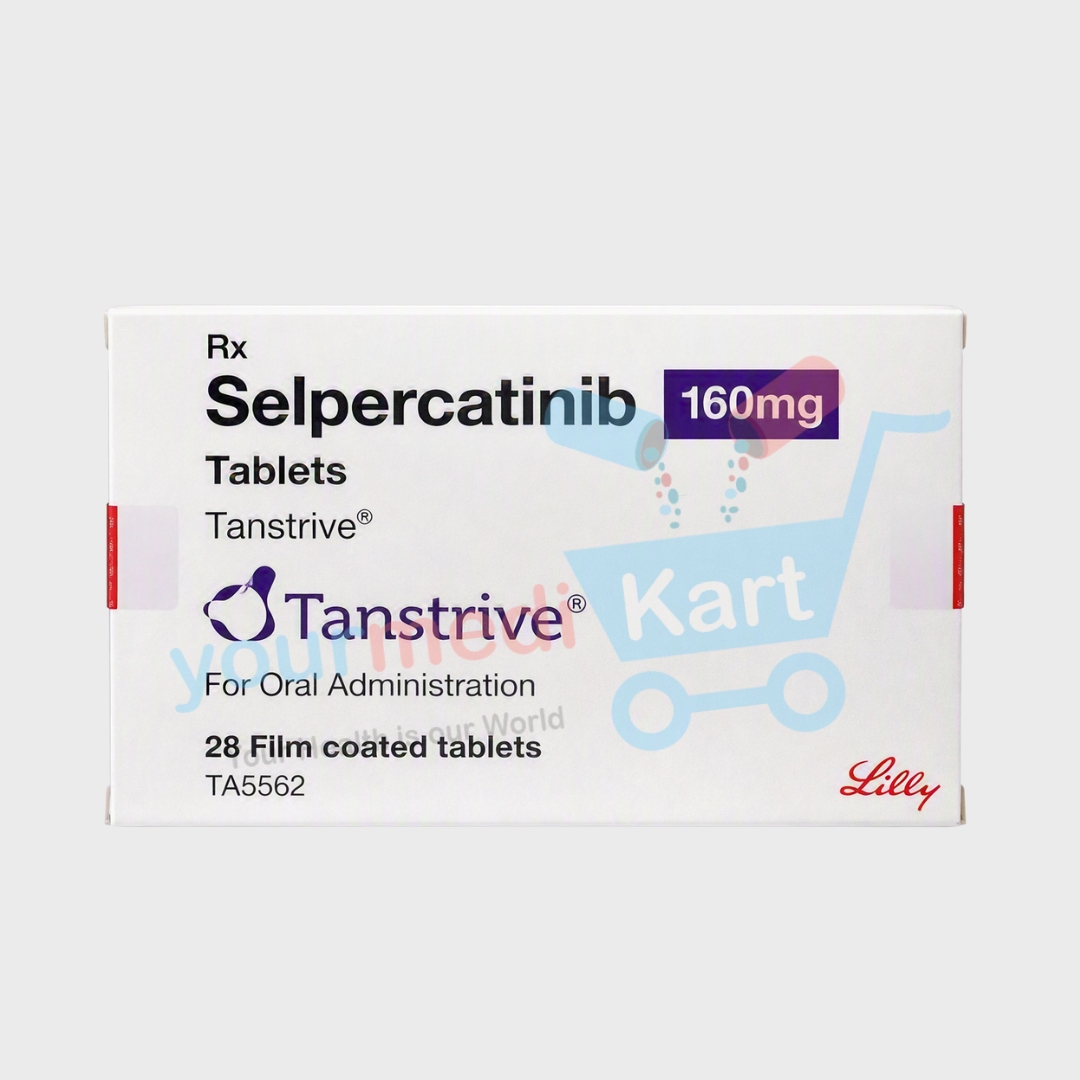
Tanstrive 160 mg Tablet contains selpercatinib, a targeted cancer medicine that belongs to the selective RET inhibitor class. Doctors use selpercatinib for certain advanced or metastatic cancers that carry specific alterations in the RET (rearranged during transfection) gene.
Unlike treatments that target cancer cells more broadly, selpercatinib focuses on abnormal RET signaling, which can contribute to cancer cell growth and progression. This makes Tanstrive 160 mg part of a biomarker-driven approach to cancer treatment, where genetic testing helps identify patients who may benefit from targeted therapy.
What Is Tanstrive 160 mg Tablet?
- Tanstrive 160 mg Tablet is an oral prescription medicine containing selpercatinib 160 mg. Eli Lilly manufactures and markets Tanstrive in India, where the medicine is available in multiple strengths, including 40 mg, 80 mg, 120 mg, and 160 mg.
- Selpercatinib selectively inhibits RET, a receptor tyrosine kinase that can become abnormally activated through mutations or gene fusions. These RET alterations can promote signals involved in tumor growth.
- Doctors prescribe Tanstrive only for patients whose cancer has an appropriate RET alteration and who meet the relevant treatment criteria.
Tanstrive 160 mg Uses
The Tanstrive 160 mg uses relate primarily to cancers driven by specific RET alterations.
In India, Tanstrive is approved for certain patients with:
- Locally advanced or metastatic non-small cell lung cancer (NSCLC) with a RET gene fusion
- Advanced or metastatic medullary thyroid cancer with a RET mutation in adults and children aged 2 years and older who require systemic therapy
- Advanced thyroid cancer with a RET gene fusion that is refractory to radioactive iodine when radioactive iodine is appropriate
- Certain locally advanced or metastatic solid tumors with a RET gene fusion that have progressed following prior systemic treatment or for which no satisfactory alternative treatment options exist
The exact eligibility criteria depend on the cancer type, RET alteration, previous treatment, age, and applicable prescribing requirements.
How Does Tanstrive Work?
- The active ingredient selpercatinib works by selectively inhibiting the RET tyrosine kinase.
- Certain RET mutations and gene fusions can produce abnormal signaling that encourages cancer cells to grow and survive. Selpercatinib blocks RET signaling, which can interfere with these cancer-promoting pathways.
- This targeted mechanism forms the basis of RET-directed cancer treatment and makes molecular testing an important part of determining whether the medicine is appropriate.
Tanstrive for RET-Positive Cancer
- Tanstrive for RET-positive cancer represents a precision oncology approach.
- A RET alteration can occur in different types of cancer. Instead of selecting treatment solely according to where the cancer started, doctors can use molecular testing to identify a specific genetic driver and then consider a therapy designed to target that alteration.
- RET alterations are relatively uncommon, but they can play an important role in selected lung, thyroid, and other solid tumors.
Tanstrive for Non-Small Cell Lung Cancer
- Doctors may prescribe Tanstrive for non-small cell lung cancer (NSCLC) when testing identifies a RET gene fusion in an eligible patient.
- RET fusions can act as cancer-driving alterations in a small proportion of NSCLC cases. Selpercatinib provides a targeted treatment option for patients whose tumors carry this alteration.
- Genomic or molecular testing therefore plays an important role before treatment selection.
Selpercatinib Tanstrive for Thyroid Cancer
- Tanstrive for thyroid cancer can apply to different RET-driven thyroid cancer settings.
- The Indian indication includes advanced or metastatic medullary thyroid cancer (MTC) with a RET mutation in eligible patients. It also covers certain advanced thyroid cancers with a RET gene fusion when the disease remains refractory to radioactive iodine, where radioactive iodine is appropriate.
- Doctors determine eligibility according to the tumor’s genetic profile and the patient’s clinical condition.
Tanstrive for Other Solid Tumors
- Selpercatinib also provides a targeted option for certain RET fusion-positive solid tumors.
- For eligible patients with locally advanced or metastatic solid tumors, treatment may be considered when the disease has progressed during or after previous systemic treatment or when no satisfactory alternative treatment options exist.
- This tumor-agnostic approach highlights the growing importance of biomarker testing in modern oncology.
Tanstrive 160 mg Dosage
The Tanstrive 160 mg dosage should follow the oncologist’s prescription and the approved dosing recommendations for the patient’s condition.
Tanstrive is taken orally twice daily. The available tablet strengths allow healthcare professionals to tailor the prescribed regimen according to the patient’s needs.
Patients should:
- Take the medicine exactly as prescribed
- Follow the recommended dosing schedule
- Avoid changing the dose without medical advice
- Follow instructions regarding food and administration provided with the current prescribing information
- Contact their healthcare provider if they miss a dose or vomit after taking a dose
The appropriate regimen can depend on individual clinical factors and other medicines the patient takes.
How Should Tanstrive 160 mg Be Taken?
- Tanstrive 160 mg Tablet is an oral medicine. Patients should swallow the tablets according to their oncologist’s instructions.
- Because selpercatinib can interact with other medicines and certain foods or supplements, patients should provide their healthcare team with a complete list of everything they take.
- Patients should not crush, split, or alter tablets unless their healthcare professional specifically instructs them to do so.
Tanstrive 160 mg Benefits
The potential Tanstrive 160 mg benefits come from its targeted action against abnormal RET signaling.
For eligible patients, selpercatinib may:
- Target RET-driven cancer signaling
- Provide a biomarker-guided treatment option
- Offer an oral alternative to certain intravenous treatment approaches
- Help manage specific advanced or metastatic RET-altered cancers
- Provide a targeted option across selected lung, thyroid, and other solid tumors
Treatment response varies from patient to patient. Doctors use imaging, laboratory tests, symptoms, and other clinical assessments to monitor treatment.
Tanstrive 160 mg Side Effects
- Like other cancer medicines, Tanstrive 160 mg side effects can occur.
- The adverse effects associated with selpercatinib can vary depending on the patient and treatment setting. Patients should discuss potential reactions with their oncology team before beginning treatment.
Important adverse reactions that healthcare professionals monitor can include:
- Increased blood pressure
- Changes in liver function
- Changes in heart rhythm
- Diarrhea
- Fatigue
- Dry mouth
- Swelling
- Rash
- Headache
- Changes in thyroid function
- Electrolyte abnormalities
Patients should report new, severe, or persistent symptoms promptly rather than stopping treatment on their own.
Important Tanstrive 160 mg Precautions
Tanstrive 160 mg precautions are particularly important because selpercatinib can affect several body systems.
Liver Function
Selpercatinib can cause changes in liver enzymes. Doctors may perform liver-function tests before and during treatment to monitor for potential liver toxicity.
Blood Pressure
Tanstrive may increase blood pressure. Healthcare professionals may monitor blood pressure regularly and treat hypertension when necessary.
Heart Rhythm
Selpercatinib can affect the QT interval in some patients. Doctors may assess cardiac risk and monitor patients who have relevant risk factors or take other medicines that can affect heart rhythm.
Thyroid Function
Selpercatinib can affect thyroid hormone levels. Patients may require thyroid-function monitoring during treatment.
Bleeding Risk
Patients should inform their healthcare team about unusual bleeding or bruising, particularly if they take medicines that affect blood clotting.
Wound Healing
Patients scheduled for surgery should inform their healthcare team that they are taking selpercatinib. Doctors may provide specific instructions about treatment around surgical procedures.
Tanstrive 160 mg Drug Interactions
Tanstrive 160 mg drug interactions can influence how selpercatinib works or increase the risk of adverse reactions.
Patients should tell their oncologist about:
- Prescription medicines
- Over-the-counter medicines
- Vitamins
- Herbal supplements
- Other cancer treatments
- Medicines used for heart conditions or blood pressure
Certain medicines can alter selpercatinib concentrations or increase the risk of heart-rhythm or other complications. Healthcare professionals should review the complete medication list before treatment.
Tanstrive and Precision Cancer Treatment
- The development of Tanstrive (selpercatinib) reflects the broader movement toward precision oncology.
- Traditional cancer treatment often focuses primarily on the cancer’s location and stage. Precision treatment adds another important factor: the molecular characteristics driving the tumor.
- For patients with an actionable RET alteration, identifying that genetic change can help doctors consider a treatment specifically designed to inhibit RET signaling.
Why RET Testing Matters
- RET testing plays an important role in deciding whether Tanstrive 160 mg may be appropriate.
- Doctors may use molecular or genomic testing to identify RET mutations or gene fusions. Without confirming the relevant biomarker, a patient may not meet the criteria for this targeted therapy.
- The specific test and testing method depend on the cancer type and local clinical practice.
Tanstrive 160 mg and Other Medicines
- Patients receiving Tanstrive may also take other medicines as part of their cancer treatment or for unrelated medical conditions.
- Doctors need to consider potential interactions before starting therapy. Patients should never add or discontinue medicines, supplements, or herbal products without discussing them with their healthcare team.
Storage and Handling
- Patients should store Tanstrive 160 mg Tablets according to the manufacturer’s instructions and keep the medicine in its original packaging unless their pharmacist provides different instructions.
- Keep the medicine away from children and avoid using tablets that appear damaged or compromised.
- For exact storage requirements, patients should follow the current product packaging and prescribing information.
Who Can Use Tanstrive 160 mg?
Tanstrive is not a general cancer medicine for every patient.
Doctors consider factors such as:
- Cancer type
- RET mutation or fusion status
- Disease stage
- Previous treatments
- Patient’s age
- Overall health
- Other medicines
- Organ function
- Potential treatment risks
A qualified oncologist should determine whether selpercatinib is appropriate.
Key Product Information
- Brand: Tanstrive
- Active ingredient: Selpercatinib
- Strength: 160 mg
- Dosage form: Tablet
- Route: Oral
- Drug class: Selective RET inhibitor
- Therapeutic area: Targeted cancer therapy
- Primary target: RET signaling
- Available strengths in India: 40 mg, 80 mg, 120 mg, and 160 mg
- Administration: Twice daily, according to the prescribed regimen
Conclusion
- Tanstrive 160 mg Tablet (selpercatinib) represents a targeted approach to treating selected cancers driven by RET alterations. By selectively inhibiting RET signaling, the medicine focuses on a molecular pathway that can contribute to tumor growth and progression.
- Understanding Tanstrive 160 mg uses, dosage, benefits, side effects, precautions, and mechanism of action can help patients better understand the role of this targeted therapy.
- Because Tanstrive is a prescription cancer medicine, treatment decisions should come from a qualified oncology team after appropriate biomarker testing and clinical evaluation.
Important Disclaimer
This article provides general educational information and does not replace medical advice, diagnosis, or treatment. Tanstrive is a prescription medicine, and its approved indications, dosage recommendations, warnings, and monitoring requirements may vary according to the country and applicable prescribing information. Patients should consult their oncologist before starting, stopping, or changing treatment.